Set Your Location
Your location is needed to find products and services that are available in your area.
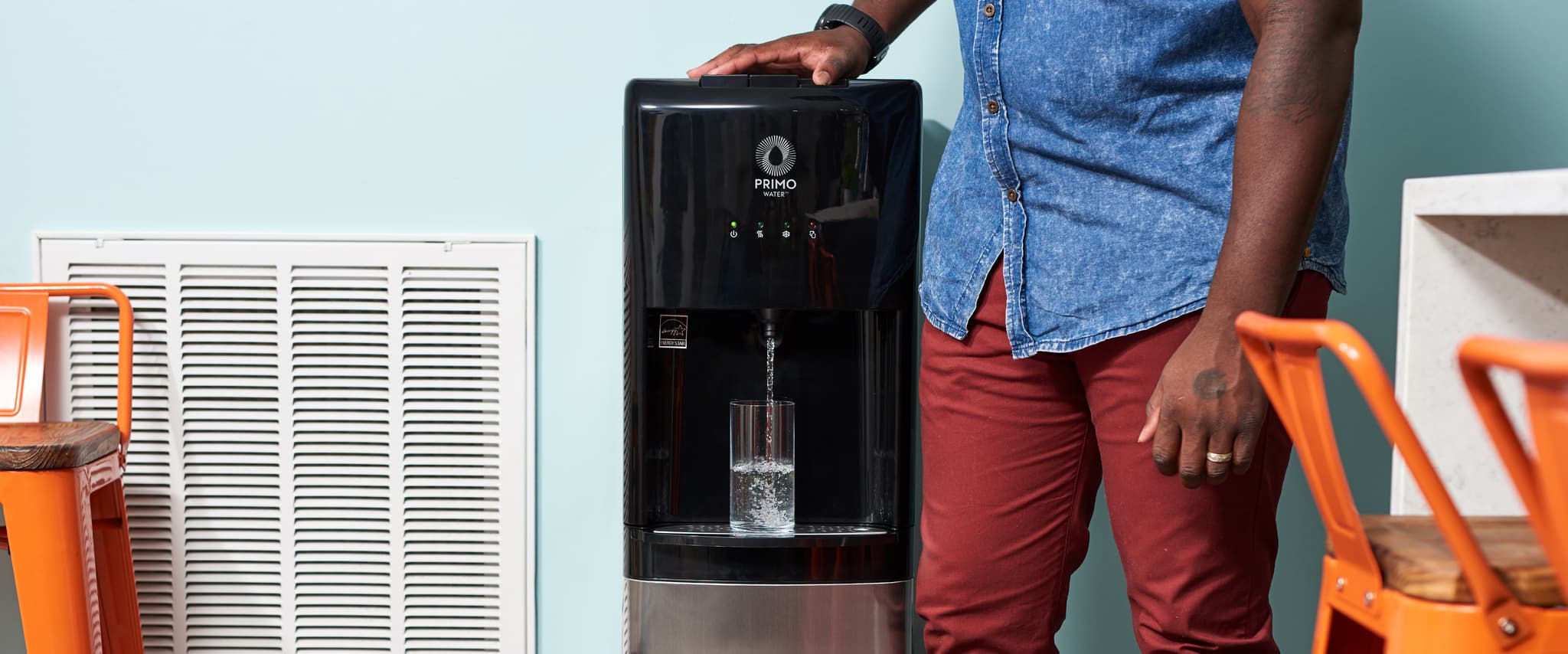
Water dispensers make it easy to access drinking water at home and in the workplace. Like any appliance that sees regular use, they also require routine care and maintenance.
That's where self-cleaning water coolers come in.
Self-cleaning dispensers are designed to support internal sanitization through built-in technologies that target microorganisms in certain areas of the dispenser. While these systems can help simplify maintenance, they do not replace routine cleaning.
Today, two of the most common self-cleaning technologies used in water dispensers are UV-LED and ozone. Understanding how each works can help you determine which option best fits your needs.
A self-cleaning water dispenser uses built-in technology to help support sanitization within specific areas of the dispenser system.
Depending on the model, that technology may be designed to help reduce microorganisms in components such as the cold-water reservoir or water pathways. Self-cleaning technology is intended to support dispenser maintenance, but it is not the same as filtration or purification.
That distinction is important. Self-cleaning technologies are designed to target microorganisms. They do not remove minerals, heavy metals, dissolved solids, or other non-microbial substances that may be present in water.
Both UV-LED and ozone technologies are designed to support internal dispenser sanitization, but they operate differently and offer different user experiences.
UV-LED technology uses ultraviolet light inside the dispenser to support sanitization.
In most UV-LED dispensers, the light is mounted within the cold-water reservoir and operates automatically. Unlike ozone-based systems, UV-LED technology does not require users to initiate a cleaning cycle.
For many users, one of the biggest advantages of UV-LED technology is convenience. The system operates quietly, requires little interaction, and does not create odors during operation.
Because the sanitization process occurs automatically, UV-LED dispensers can provide a low-maintenance experience for households and workplaces alike.
Ozone self-cleaning dispensers use a sanitization cycle that introduces ozone into designated areas of the dispenser.
Depending on the model, the cycle may run automatically or require manual activation. Some dispensers are designed to perform shorter daily sanitization cycles automatically, while others allow users to start a longer cleaning cycle when desired.
During operation, the dispenser may produce a slight humming sound. Some users may also notice a mild odor while the cycle is running. This odor typically dissipates shortly after the sanitization process is complete.
For models that require manual activation, it is often helpful to schedule the cycle during periods when the dispenser will not be in use, such as overnight or outside of normal business hours.
Many ozone-equipped dispensers also include indicator lights that signal when a sanitization cycle is in progress.
One of the most common misconceptions about self-cleaning water coolers is that they never need to be cleaned.
In reality, self-cleaning technology and routine cleaning serve different purposes.
Self-cleaning systems are designed to help support sanitization by targeting microorganisms in certain internal areas of the dispenser. Routine cleaning helps address mineral buildup, residue, drip trays, exterior surfaces, and other areas that self-cleaning technologies are not designed to manage.
Following the cleaning and maintenance recommendations for your specific dispenser can help support long-term performance and reliability. For a step-by-step guide, explore our article on how to clean a water dispenser.
Both UV-LED and ozone technologies are designed to support internal dispenser sanitization, but the right option depends on your preferences and how you plan to use your dispenser.
You may prefer a UV-LED dispenser if you:
Want a quieter experience
Prefer a system that operates automatically
Do not want to think about scheduling sanitization cycles
You may prefer an ozone-based dispenser if you:
Are comfortable running scheduled sanitization cycles
Want the flexibility to initiate cleaning when it fits your routine
Prefer a system that actively indicates when a sanitization cycle is occurring
For many households, the decision comes down to convenience and personal preference. Both technologies are designed to support dispenser maintenance while helping simplify day-to-day care.
If you're ready to compare available options, explore our selection of self-cleaning water dispensers to find a model that fits your home or workplace needs.
A self-cleaning water dispenser uses built-in sanitization technology, such as UV-LED or ozone, to help support internal dispenser maintenance by targeting microorganisms in specific treated areas.
Yes. Self-cleaning technology is designed to support sanitization, but routine cleaning is still recommended to address mineral buildup, residue, drip trays, and exterior surfaces.
Both technologies are designed to support internal dispenser sanitization. UV-LED systems typically operate automatically and silently, while ozone systems use scheduled sanitization cycles. The best choice depends on your preferences and how you plan to use the dispenser.