Set Your Location
Your location is needed to find products and services that are available in your area.

When you turn on your kitchen faucet, you expect safe drinking water. In most communities, municipal systems treat and test water according to federal and state guidelines before it reaches your home. Even so, water quality can be influenced by a range of factors beyond the treatment facility.
Still, many homeowners are asking more detailed questions about water quality, contaminants, and whether additional home water filtration is necessary. Understanding how water travels from its source to your table can help you make informed decisions about your household’s drinking water.
After treatment, water travels through miles of infrastructure before reaching residential plumbing systems.
Several factors can influence what ultimately flows from your tap, including local environmental conditions, municipal treatment processes, aging infrastructure, and household plumbing materials.
Even when water leaves a treatment facility meeting regulatory standards, changes can occur as it moves through distribution systems and into private homes.
Reviewing your local Consumer Confidence Report can also provide insight into what substances are detected in your area and how they compare to established standards. You can also explore water quality reports from Primo Brands™ to learn more about how water is tested and monitored across our portfolio, including:
If you are considering home water filtration, it helps to understand how filtration and purification are commonly defined.
Filtration systems are designed to reduce specific substances from water, often focusing on things like sediment, taste, or odor. Many systems use one or more stages of treatment to address targeted concerns.
Purification processes generally refer to more advanced, multi-step treatment methods intended to reduce a broader range of dissolved solids and other substances. These systems may incorporate technologies such as reverse osmosis as part of the overall process.
In practice, both approaches rely on established treatment technologies. The key difference is usually how comprehensive the system is designed to be.
To learn more about one of the most commonly used treatment methods, explore our guide to reverse osmosis and purified drinking water.
Understanding these differences can help you evaluate which approach aligns with your preferences and household needs.
For many families, tap water meets their expectations. For others, factors such as taste preference, aging plumbing, or a desire for added consistency lead them to explore supplemental options.
Some households choose refill programs as part of their routine. Learn more about Primo Water® Refill options.
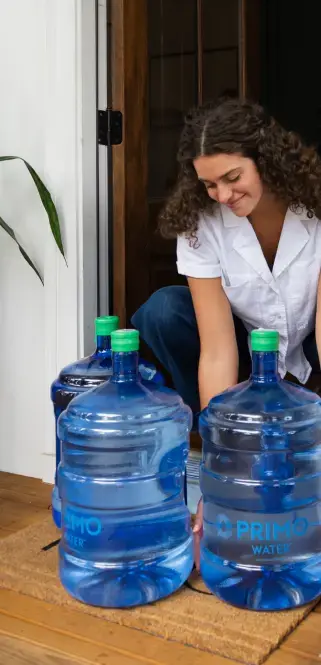
Others prefer swapping empty 5-gallon bottles for pre-filled, professionally sanitized 5-gallon bottles through Primo Water Exchange.
For a broader overview of available solutions, visit our water services page.
Each option is designed to provide dependable access to drinking water while fitting different lifestyles and preferences.
Water does not exist in isolation. It moves through local watersheds and ecosystems before reaching homes and businesses.
Responsible water management plays an important role in supporting long-term supply and water quality in the regions where companies operate. Stewardship efforts, monitoring, and infrastructure investments all contribute to maintaining dependable drinking water systems.
Water quality conversations have evolved in recent years. More consumers are taking an active role in understanding what’s in their water, how it’s treated, and what options are available to them. That shift reflects a broader focus on environmental awareness and personal wellness.
From tap to table, understanding water quality in your home is less about alarm and more about awareness. By learning how municipal treatment works, what contaminants are commonly discussed, and how filtration methods differ, you can make informed decisions that align with your household’s priorities.
Consistent access to high-quality drinking water starts with clarity. And clarity begins with understanding the journey your water takes every day.
To learn more about the environmental initiatives, water stewardship efforts, and resource management priorities that support this work, visit the Primo Brands sustainability page.
Sign up to learn more and get alerts on any news or offers.